
Service Detail

Structural Drying

Controlled drying of walls, floors, and framing with verified moisture readings at each stage.

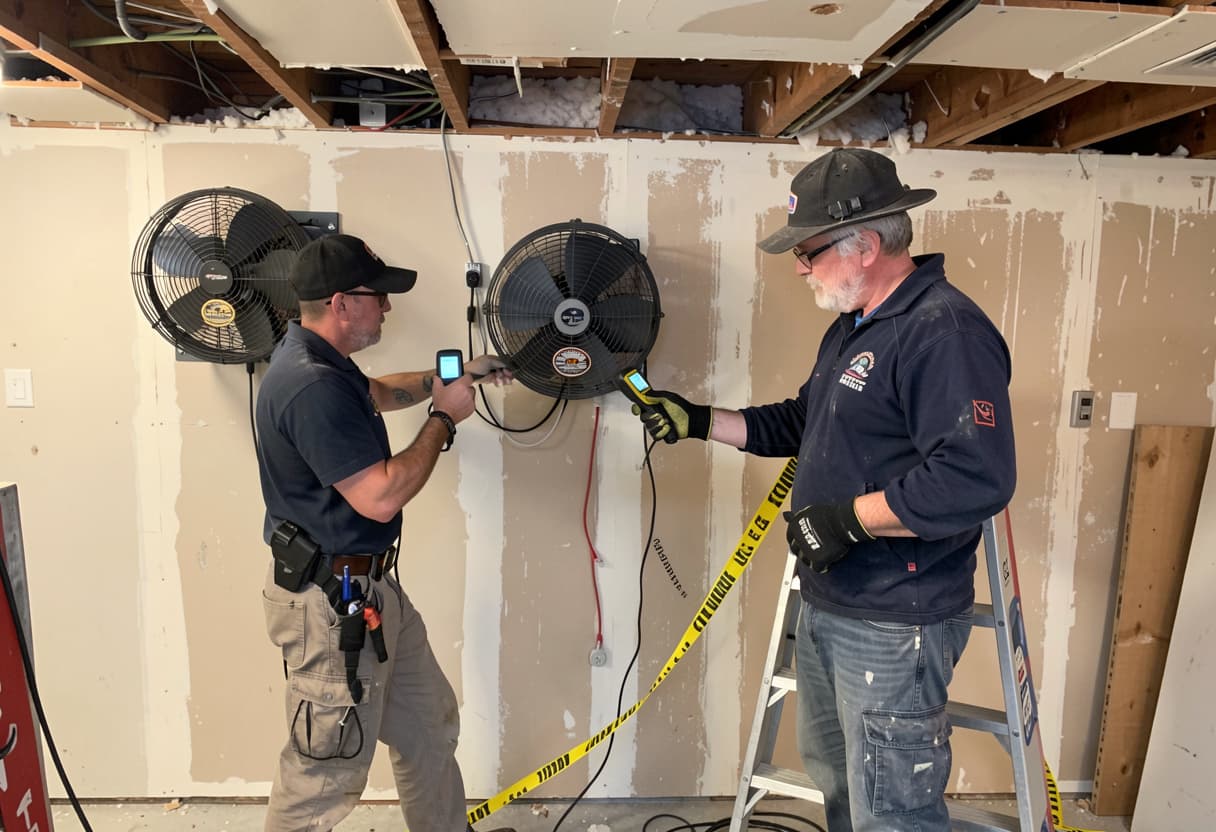
Structural drying equipment setup

How This Service Works

After extraction, air movers and dehumidifiers are deployed using a zone-based plan built around material type and psychrometric conditions.

Contractor teams track moisture daily in framing, drywall, and flooring systems, then adjust equipment placement until all readings are within target range.

This controlled process prevents hidden dampness and prepares the property for safe reconstruction.

Where needed, directional airflow and containment are applied to accelerate drying in dense assemblies without over-drying unaffected spaces.

  • Airflow and humidity strategy per affected zone
  • Daily meter readings and progress logging
  • Final moisture verification before repair stage
  • Equipment balancing based on changing room conditions
  • Dry-standard confirmation before rebuild authorization

Typical Cases and Solutions

Case: Damp framing after pipe burst

Surface looked dry, but meter readings stayed high inside wall assemblies.

Solution

Targeted airflow pattern and extended dehumidification with daily monitoring.

Case: Warping engineered wood flooring

Moisture trapped below floor system after appliance overflow.

Solution

Subfloor drying strategy, pressure adjustments, and staged equipment changes.

Case: Persistent indoor humidity after cleanup

General cleanup was completed, but structure remained above dry standard.

Solution

Rebalanced drying setup and containment to accelerate evaporation.

Detailed Service Scope

Psychrometric Control

Contractor teams monitor temperature, relative humidity, and grain depression to keep drying conditions in an effective operating range.

Material-Specific Targets

Wood, drywall, and concrete each dry at different rates, so independent targets are tracked before clearance is issued.

Hidden Moisture Detection

Infrared and meter verification helps identify trapped moisture in cavities and subfloor systems not visible at surface level.

Completion Criteria

Drying ends only after documented readings confirm structure-wide stability against baseline standards.

FAQ

How long does structural drying usually take?

Most projects run several days, depending on material saturation and environmental conditions.

Can walls be closed before final readings are dry?

No. Contractor teams verify target moisture levels first to avoid future mold and repair failure.

Are drying readings typically shared with homeowners?

Yes. Many providers share logs that show progress and final completion status.

Can drying be accelerated safely?

Yes, but only through controlled equipment adjustments. Aggressive settings without monitoring can create secondary issues.

Need Moisture Control?

Schedule Structural Drying Assessment

Get a monitored drying plan with documented progress from start to finish.