
Service Detail

Emergency Water Extraction

Standing-water removal category focused on limiting structural impact and preparing for drying.

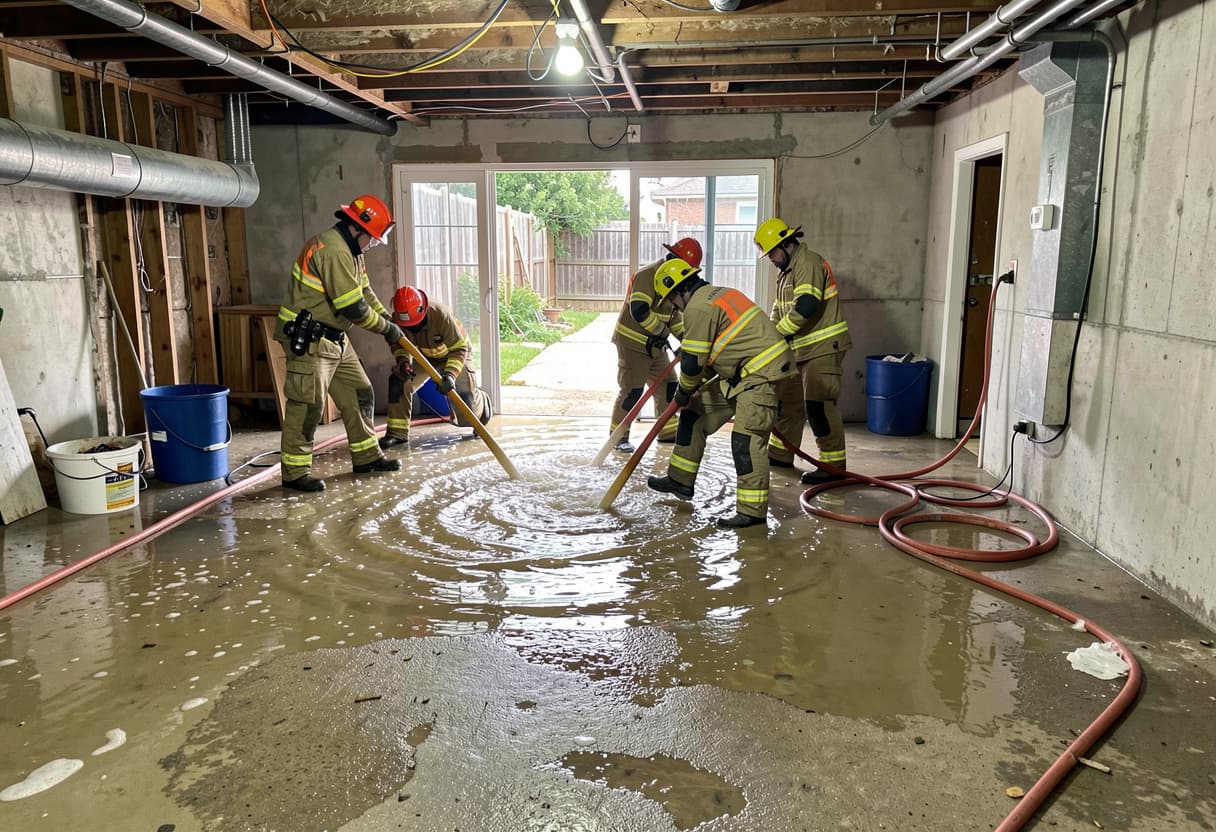
Emergency water extraction in progress

How This Service Works

Contractor teams start with source control, safety isolation, and high-volume extraction to remove standing water before deeper material damage spreads.

Contractor teams use portable and truck-mounted equipment based on access and contamination category, then document all affected zones for the next mitigation stage.

Speed is critical during the first hours. Early extraction significantly lowers the risk of warping, microbial growth, and secondary demolition.

For mixed-loss situations, clean-water and contaminated zones are separated, safe access paths are coordinated, and equipment is staged to keep unaffected rooms protected.

  • Rapid pump-out from basements, slab areas, and low points
  • Targeted extraction around walls, cabinets, and floor transitions
  • Initial moisture map for drying and insurance documentation
  • Hazard isolation around electrical and slip-risk areas
  • Category-based handling protocol for sanitary and gray/black water events

Typical Cases and Solutions

Case: Basement flooding after sump pump failure

Water accumulated overnight and soaked wall bases and storage areas.

Solution

Emergency extraction, perimeter moisture checks, and early drying setup.

Case: Burst water heater in utility room

Standing water spread into adjacent hallway and flooring assembly.

Solution

Source shutdown, material-specific extraction, and zone containment.

Case: Appliance leak into kitchen subfloor

Hidden moisture under finishes with no visible surface pooling.

Solution

Focused cavity extraction plus moisture tracking before structural drying.

Detailed Service Scope

Initial Site Stabilization

Contractor teams verify source shutoff, assess active spread paths, and isolate affected areas before extraction starts to avoid cross-contamination.

Extraction Strategy

Equipment selection is based on depth, material saturation, and access constraints so bulk removal happens as fast and safely as possible.

Material Triage

Contractor teams classify materials as salvageable or non-salvageable using moisture state, contamination category, and structural integrity thresholds.

Transition to Drying

After extraction, moisture maps, zone priorities, and a monitored drying plan guide the next stage and reduce hidden residual moisture risk.

FAQ

How fast should extraction start after a leak?

Ideally within the first few hours. Faster removal reduces secondary structural and microbial risk.

Can extraction start before floor removal?

Yes. Contractor teams evaluate salvageability first, then remove only materials that cannot be safely restored.

Do you provide claim-friendly documentation?

Yes. Contractor teams provide photos, moisture notes, and scope details to support insurance communication.

What if water keeps entering during extraction?

Contractor teams prioritize source control and containment first, then resume staged extraction once inflow is stopped.

Need Matching Support?

Call Now for Emergency Water Extraction

Review local provider options for extraction and next-step mitigation planning.